
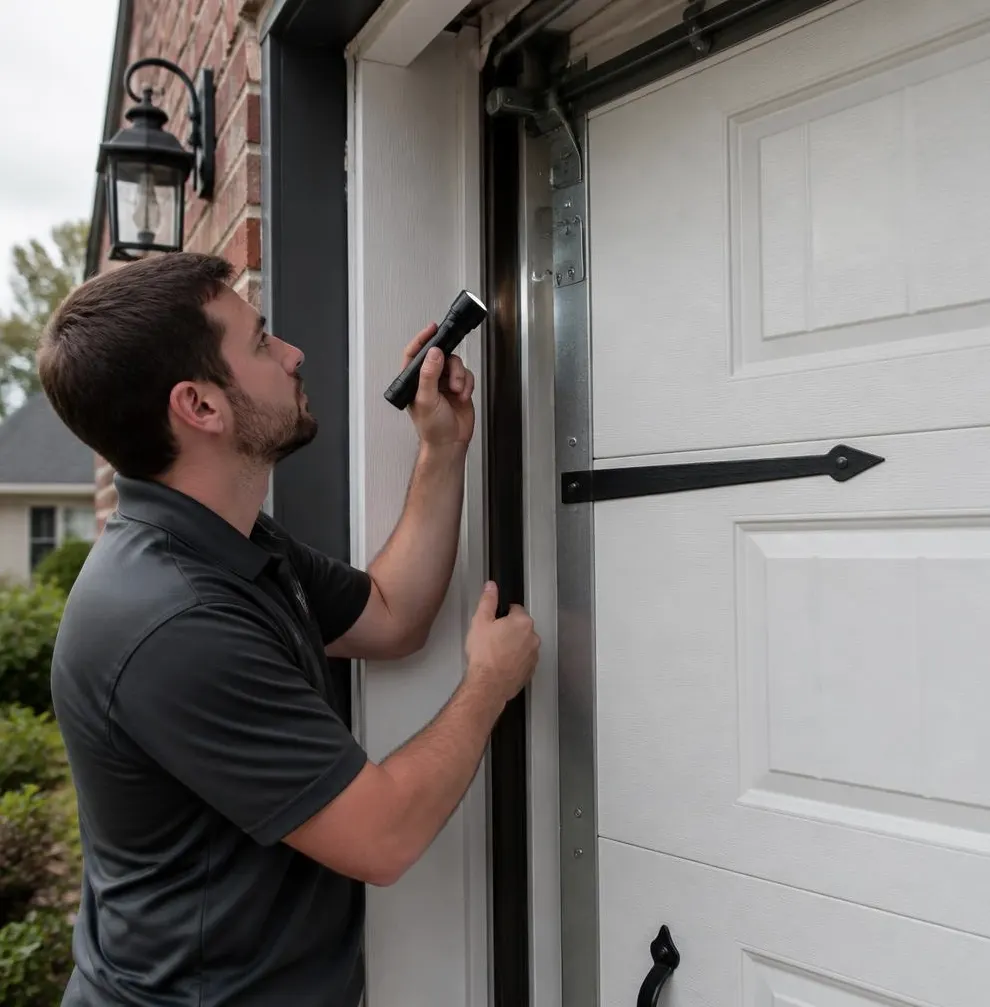
You hit the button on a cold morning, coffee in hand, already running late, and the door doesn't just open — it groans. There's a metallic screech at the top of the track, a grinding noise where the hinges fold, maybe a shudder that makes you wonder if today's the day it finally gives out. Nine times out of ten, that noise isn't a sign your door is dying. It's a sign it's thirsty.
Garage doors have more moving metal parts than most homeowners realize — hinges, rollers, springs, a track system, and often a chain or screw-drive opener. All of that hardware needs lubrication to move quietly and wear evenly. In this part of Michigan, where winter brings deep cold, road salt tracked in on tires, and a spring thaw that turns everything to grit and mud, that hardware works harder and dries out faster than it would somewhere milder. A five-minute lubrication job a couple times a year can prevent a lot of the squealing, sticking, and premature wear that sends people searching for a garage door company in Hartford MI sooner than they'd like.
Tools You'll Need
- A lithium-based garage door lubricant (spray or tube) — sold specifically for garage doors at most hardware stores
- A silicone-based spray for rubber weatherstripping and seals
- A clean, lint-free rag
- A soft-bristle brush (an old toothbrush works)
- A step ladder
- Safety glasses
- Work gloves
What to Use — and What to Avoid
The products matter as much as the technique. Lithium-based grease or spray is the standard choice for hinges, rollers, and springs. It clings to metal, holds up in cold temperatures, and doesn't wash away easily.
Silicone spray is the right call for rubber parts — the weatherstripping at the bottom of the door and along the sides. It keeps rubber flexible through winter instead of letting it crack and stiffen in sub-zero temperatures.
Now the part people get wrong most often:
- Avoid WD-40 for lubrication purposes. It's a solvent, not a lubricant — great for loosening a stuck bolt, but it evaporates quickly and leaves parts dry again within days. Worse, it attracts dust and grit, which is exactly what you don't want on moving hardware in a Michigan garage.
- Avoid standard grease or petroleum jelly. It's too thick, gets stiff in cold weather, and becomes a magnet for dirt and salt residue.
- Avoid motor oil. It's too thin to stay in place, drips onto the garage floor, and won't last through a season.
- Never spray lubricant directly onto the track. The track itself should stay clean and dry — lubricant on the track surface just collects grime and can make the rollers slip instead of roll.
Step-by-Step: How to Lubricate Your Garage Door
- Disconnect the opener and close the door. Pull the manual release cord so the door is fully under your control, and unplug the opener unit if it's accessible. You want the door still and the power off before you start working near moving parts.
- Clean before you lubricate. Wipe down the tracks, hinges, and rollers with a rag to remove built-up dirt, dust, and any salt residue tracked in from the driveway over winter. A dry track and clean hardware let new lubricant do its job instead of sealing in grime.
- Lubricate the hinges. Apply a small amount of lithium spray or grease to each hinge pivot point — the spot where the metal folds as the door bends to go up the track. Work the door up and down by hand a few times to spread it in.
- Lubricate the rollers. If you have steel rollers with ball bearings, apply lubricant to the bearing area, not the wheel surface itself. Nylon rollers need little to no lubrication on the roller itself — just the bearing, if it has one.
- Coat the springs lightly. A thin film of lithium lubricant on the torsion spring (the large spring mounted above the door, if your system is overhead) helps reduce friction and rust. Keep it light — you're coating the coils, not soaking them.
- Lubricate the opener's chain or screw drive, following the lubricant the opener manufacturer recommends, which is usually listed in the manual.
- Apply silicone spray to the weatherstripping along the bottom and sides of the door to keep the rubber pliable through the cold months ahead.
- Wipe off excess lubricant with a clean rag, then run the door up and down several times to work everything in and catch any spot you missed.
What's a Homeowner Job, and What Isn't
Cleaning and lubricating hinges, rollers, tracks, and weatherstripping is well within reach for most homeowners with a ladder and an afternoon. It's quick, it's low-risk, and doing it before winter weather sets in and again after the spring thaw will keep things running quiet and smooth.
What's not a DIY job is anything involving the torsion spring's tension, the cables, or the drums. These parts are under extreme tension and adjusting, removing, or replacing them without the right tools and training is genuinely dangerous — this is the line where lubrication stops and repair begins. If lubrication doesn't quiet the noise, or you notice a gap in the spring coils, a frayed cable, or a roller that's chipped or off its track, that's a sign of a mechanical problem lubricant can't fix.
When to Call Hartford Garage Door
If you've cleaned and lubricated everything and the door still grinds, sticks, or sags on one side, the issue is likely worn rollers, a bent track, or spring tension that's out of balance — not something a spray bottle will solve. Our Garage Door Maintenance service covers a full hardware inspection along with proper lubrication, so every part gets checked, not just the parts you can reach from a ladder. And if a spring is worn, stretched, or showing rust and wear in the coils, our Spring Replacement service handles it safely, with the right tools for the tension involved.
If your garage door is squealing, sticking, or just doesn't feel right heading into another Michigan winter, call Hartford Garage Door. We serve Hartford, Watervliet, Coloma, Bangor, Lawrence, Dowagiac, Paw Paw, and South Haven, and we're ready to get your door running smoothly before the snow and salt settle in for the season.